Medieval Europe · 1347
The Mongol Empire: History's Greatest Land Conquest
How Genghis Khan unified nomadic tribes and built the largest contiguous land empire in history, creating a Pax Mongolica that connected civilizations from China to Eastern Europe.
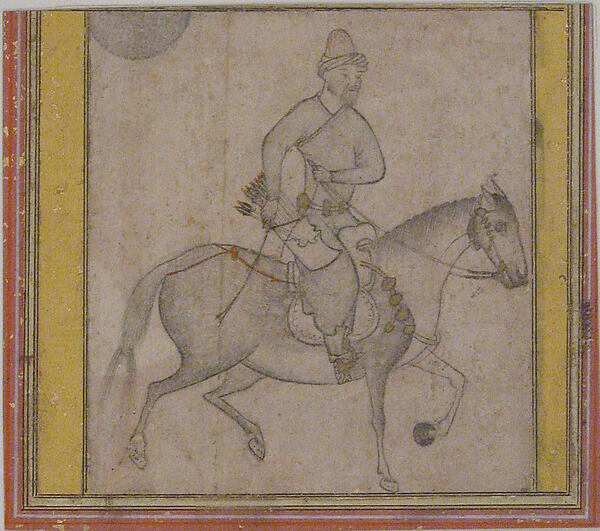
CivilisationMongol Empire
RegionAsia
Period1162 CE to 1368 CE
Published15 March 2025
Advertisement
At its peak in the late thirteenth century, the Mongol Empire covered approximately 24 million square kilometers, roughly the size of the African continent, making it the largest contiguous land empire in human history. Understanding how an outwardly modest nomadic confederation of perhaps two million people achieved this extraordinary expansion requires examining both Mongol military innovation and the structural vulnerabilities of the sedentary empires they conquered.
Temüjin's Rise
The man who would become Genghis Khan was born around 1162 CE as Temüjin, son of a minor Mongol chieftain. His childhood was precarious: his father was poisoned by rivals when he was nine, leaving the family destitute and forcing them to survive on wild plants and game on the Mongolian steppe. Temüjin was even enslaved briefly by a rival clan.
This harsh beginning forged a leader with a clear-eyed understanding of the nomadic tribal system's fundamental weakness: the endless cycle of clan raiding and vengeance that prevented unified political action. Temüjin's genius was to break this cycle by building loyalty not to clan or tribe but to himself personally, and then to a new Mongol identity that transcended traditional divisions.
By 1206, he had unified virtually all the Mongol and Turkic tribes of the steppe under his leadership. At a great assembly (kurultai) on the Onon River, he was proclaimed Genghis Khan, approximately "Universal Ruler."
Military Innovation
The Mongol army was not simply nomadic cavalry; it was a sophisticated combined-arms force that had learned to overcome every defensive adaptation its opponents developed.
The core Mongol tactical unit was the arban (ten men), organized into jaghuns (hundreds), mingghans (thousands), and tumens (ten thousands). This decimal organization, enforced by strict meritocratic promotion based on battlefield performance, created a command structure that could execute complex maneuvers across enormous distances.
Against fortified cities, the traditional defense of sedentary peoples against nomadic raiders, the Mongols acquired siege engineers from conquered peoples. Chinese engineers provided expertise in catapults and early gunpowder weapons; Persian engineers built siege towers; and the Mongols employed captured artisans throughout the empire.
The Terror Strategy
Mongol conquest was deliberately terrorizing in its scale. Cities that surrendered received generally favorable terms; cities that resisted were typically destroyed utterly, their populations massacred or enslaved. This was not mere cruelty but strategy: the reputation for devastating resistance made subsequent cities more likely to surrender without a fight.
When Genghis Khan's cavalry appeared before Zhongdu (modern Beijing) in 1215, the Jin Dynasty capital, the Mongolian siege was so psychologically overwhelming that flames reportedly burned for a month after the city fell. Travelers decades later described seeing the bleached bones of the dead still littering the plain around the ruined city.
The Pax Mongolica
Yet the Mongol Empire also created something unprecedented: a zone of relative peace and security stretching from China to Eastern Europe. The Pax Mongolica of the late thirteenth and early fourteenth centuries allowed merchants, ambassadors, missionaries, and travelers to move across Eurasia with a degree of safety that would not be seen again until the modern era.
Marco Polo's overland journey to China (c. 1271-1295) was made possible by the Mongol road network, the system of relay stations (yam) that could carry a message from Beijing to Persia in days, and the Mongol protection of merchants' property. Diplomatic missions moved between European powers and the Mongol courts; the Franciscan friar William of Rubruck visited the court of the Great Khan Möngke in Karakorum in 1254.
Division and Decline
The very scale of the Mongol Empire made it ungovernable as a unity. After the death of the Great Khan Möngke in 1259, the empire split into four competing khanates: the Yuan dynasty in China, the Ilkhanate in Persia and the Middle East, the Chagatai Khanate in Central Asia, and the Golden Horde in Russia and the western steppe.
Each khanate followed a distinct path. The Yuan emperors increasingly adopted Chinese bureaucratic practices. The Ilkhans converted to Islam and patronized Persian art and architecture. The Golden Horde remained the most nomadic of the successor states, ruling Russia from their steppe camps for nearly 250 years.
The plague, likely spread along Mongol trade routes, helped unravel the empire's cohesion. The last remnant of Mongol rule in China fell to the Ming dynasty in 1368.
Legacy
The Mongol conquests were catastrophic for many regions: Central Asian civilizations, the Abbasid Caliphate (destroyed by Hülegü Khan at Baghdad in 1258), and the populations of Persia and northern China suffered devastating demographic losses from which some regions recovered only centuries later.
Yet the Mongols also connected the world. The movement of people, ideas, and diseases across Eurasia during the Pax Mongolica was the first true globalization. The demographic catastrophe of the plague, which traveled west along these connected networks, paradoxically helped birth the modern world by disrupting feudal labor relations in Western Europe.
Advertisement
Timeline Placement
1162 CE – 1368 CE
Medieval Era · Mongol Empire · Asia
MilitaryTradeGovernanceExpansion
Continue: The Medieval World
Related Articles
MedievalAnalysis
The Black Death and the Bargaining Power of Survivors
A pandemic that killed perhaps half of Europe also destroyed the labour arrangements that had held for centuries. What…
3 min
MedievalEvent
The Fall of Constantinople, 1453
How the Ottoman Sultan Mehmed II ended a thousand years of Byzantine civilization in a fifty-three day siege that resh…
4 min
ClassicalOverview
The Rise of the Roman Republic
How Rome transformed from a small Italian city-state into a dominant republic that shaped Western civilization through…
4 min
Further Reading
As an affiliate, we earn from qualifying purchases. These recommendations are independently selected.
📚 Book
The Art of War
Sun Tzu
The foundational text on military strategy and tactics.
View on Amazon →
📚 Book
Carnage and Culture
Victor Davis Hanson
How Western military culture shaped world history.
View on Amazon →
📚 Book
The Silk Roads
Peter Frankopan
A new history of the world through its trade networks.
View on Amazon →
Advertisement