Hellenistic Egypt · 283 BCE
Alexander the Great: The World Conqueror
Tracing Alexander III of Macedon's extraordinary military campaigns from Greece to India, examining both his strategic genius and the Hellenistic world his conquests created.
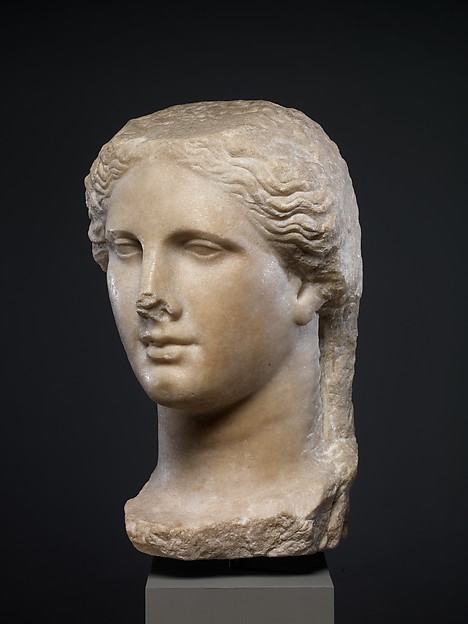
CivilisationMacedonian Empire
RegionMediterranean
Period356 BCE to 323 BCE
Published1 February 2025
Advertisement
In thirteen years of continuous campaigning, Alexander III of Macedon conquered an empire stretching from Greece to northwestern India, a territory no single ruler before him had ever controlled. He died at thirty-two, leaving behind a transformed world and legends that would persist for millennia.
The Education of a King
Alexander was born in 356 BCE in Pella, capital of Macedon, to King Philip II and his principal wife Olympias of Epirus. His education was entrusted to Aristotle, who taught him not only philosophy, rhetoric, and science but instilled in him a lifelong reverence for Homer's Iliad, particularly for Achilles, whose heroic but brief life became a model Alexander consciously emulated.
Philip II had already transformed Macedon from a backward northern kingdom into the dominant power of Greece. He reformed the Macedonian army, introducing the sarissa, a spear up to 21 feet long, wielded by infantry in the phalanx formation. He also developed the hetairoi, the Companion cavalry, as a decisive offensive arm.
Alexander inherited these tools and improved upon them. His addition was tactical genius: the ability to coordinate infantry and cavalry in real-time, identify the decisive moment in a battle, and strike there personally with the Companion cavalry.
The Persian Campaign Begins
In 334 BCE, Alexander crossed the Hellespont with approximately 37,000 soldiers. His first major engagement, at the Granicus River, established a pattern that would repeat across his campaigns: the Macedonian phalanx pins the enemy center while Alexander leads the cavalry in a devastating flank attack.
At Issus (333 BCE), he defeated the Persian Great King Darius III himself, capturing the Persian royal family. Rather than treating them as slaves, Alexander accorded them every dignity due their station, a calculated act of magnanimity that helped persuade Persian nobles he could be a legitimate successor to Achaemenid rule.
The siege of Tyre (332 BCE) demonstrated another dimension of his genius: engineering. When the Phoenician city of Tyre refused to submit, Alexander built a causeway two miles long from the mainland to the island fortress, then deployed siege towers to bring the walls within reach. After seven months, Tyre fell.
Egypt and the Oracle of Ammon
Alexander's descent into Egypt in 332 BCE was more than a military operation. It was a spiritual one. He made a difficult winter journey across the Libyan desert to the oracle of Ammon at the Siwa Oasis. Whatever the oracle told him was never disclosed, but Alexander emerged claiming divine status as son of Ammon-Zeus.
He founded Alexandria at the mouth of the Nile, one of perhaps twenty cities he would name after himself. This one survived as a major Mediterranean metropolis for centuries, becoming home to the famous Library of Alexandria and a center of Hellenistic learning.
Gaugamela and the Fall of Persia
The decisive battle of the Persian campaign came at Gaugamela (331 BCE). Darius had chosen a flat plain to neutralize Macedonian tactics, leveled the ground for his scythed chariots, and assembled an army perhaps four times larger than Alexander's.
The battle opened with Darius launching his chariots. Macedonian troops opened their ranks to let the chariots pass harmlessly through, then closed again, one of history's most dramatic battlefield adaptations. When a gap opened between Persian units, Alexander led the Companion cavalry directly toward Darius. The Persian king fled; his empire collapsed.
The Eastern Campaigns
The conquest of the Persian heartland was followed by increasingly difficult campaigns in Bactria and Sogdia (modern Afghanistan and Central Asia) against guerrilla resistance led by Spitamenes. Alexander spent three years pacifying this region, longer than any of his other campaigns.
His marriage to the Bactrian princess Roxane was practical as much as romantic: it legitimized his rule among the local aristocracy and signaled his intention to rule as a Persian king, not merely a foreign conqueror.
The Indian campaign of 326 BCE brought Alexander's army to its limit. At the Hydaspes River (modern Punjab, Pakistan), he faced King Porus and his war elephants in the most technically demanding battle of his career. He won, but his army refused to march further east. At the Hyphasis River, his generals knelt and wept. They had traveled enough.
Legacy and the Hellenistic World
Alexander died in Babylon in 323 BCE, possibly of typhoid fever complicated by heavy drinking and a liver weakened by wounds. He was thirty-two years old. His body was never properly buried; it became a political trophy in the wars among his successors.
What he left behind was a Hellenistic world, a civilization that blended Greek culture with the traditions of Egypt, Persia, and the Near East. Greek became the lingua franca of trade and scholarship from the Mediterranean to India. The intellectual traditions of Babylon, Egypt, and Greece cross-pollinated in cities like Alexandria and Antioch.
This synthesis of East and West shaped the culture into which Christianity and Islam would later emerge, making Alexander's conquests one of history's most consequential cultural transmissions.
Advertisement
Timeline Placement
356 BCE – 323 BCE
Classical Era · Macedonian Empire · Mediterranean
MilitaryCulturePoliticsExpansion
Continue: The Classical World
Related Articles
ClassicalBiography
Hannibal: Fifteen Years Inside Enemy Territory
He crossed the Alps with an army, destroyed three Roman forces in three years, and then could not finish it. The Secon…
3 min
ClassicalAnalysis
The Birth of Democracy in Athens
How the reforms of Cleisthenes and Pericles created the world's first participatory democracy in fifth-century Athens,…
5 min
ClassicalOverview
The Rise of the Roman Republic
How Rome transformed from a small Italian city-state into a dominant republic that shaped Western civilization through…
4 min
Further Reading
As an affiliate, we earn from qualifying purchases. These recommendations are independently selected.
📚 Book
The Art of War
Sun Tzu
The foundational text on military strategy and tactics.
View on Amazon →
📚 Book
Carnage and Culture
Victor Davis Hanson
How Western military culture shaped world history.
View on Amazon →
📚 Book
Sapiens
Yuval Noah Harari
A brief history of humankind and the cultures we created.
View on Amazon →
Advertisement