Byzantine Empire · 1395
The Black Death and the Bargaining Power of Survivors
A pandemic that killed perhaps half of Europe also destroyed the labour arrangements that had held for centuries. What followed was not only grief but leverage.
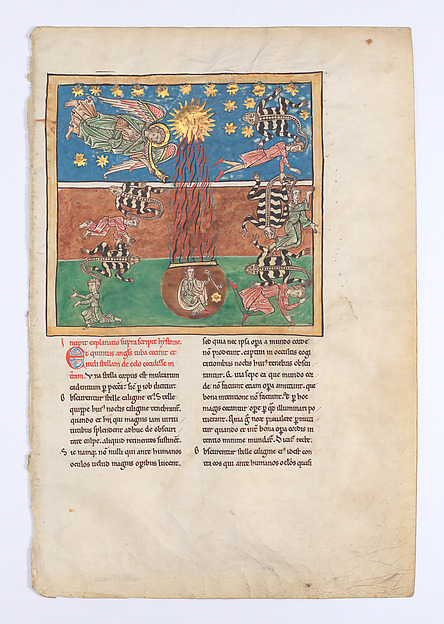
CivilisationMedieval Europe
RegionEurope
Period1347 CE to 1400 CE
Published31 July 2026
Advertisement
In October 1347 ships arrived at Messina in Sicily carrying crews who were already dying. Within four years the disease had reached Norway. Estimates of the death toll across Europe range from a third to a half of the population, and some regions lost more.
The demographic hole it left did not close for roughly two hundred years.
What It Was
The pathogen has been identified from the dental pulp of medieval burials as Yersinia pestis, the bacterium responsible for plague. Its usual reservoir is rodent populations, and it reaches humans through fleas.
The transmission story is more contested than it used to be. The traditional account puts black rats and their fleas at the centre. The speed and seasonal pattern of the medieval spread fit poorly with rat borne transmission, and human fleas, body lice and direct person to person spread of the pneumonic form probably all contributed.
Contemporaries had no germ theory. Explanations reached for corrupted air, unfavourable planetary alignments, and divine punishment. Responses followed from those explanations: aromatic herbs against bad air, processions and penance against divine anger, and in the worst cases the massacre of Jewish communities accused of poisoning wells, most notoriously at Strasbourg in 1349.
The one measure that genuinely worked was isolation. Ragusa and then Venice held arriving ships offshore for a fixed period. The Venetian term for forty days, quarantena, is where the word quarantine comes from.
The Economics of Scarcity
Before 1347 Europe was crowded. Population had grown for three centuries, land was subdivided, and labour was abundant and therefore cheap. Serfdom and its obligations rested on that abundance: a peasant who left had nowhere better to go.
After 1347 the arithmetic inverted. There was more land than people to work it, and the survivors knew it. Wages rose sharply. Tenants demanded lower rents and fewer obligations, and when refused, they left for landlords who would agree.
Governments legislated against this immediately. England's Ordinance of Labourers in 1349 and Statute of Labourers in 1351 tried to freeze wages at pre plague levels and criminalised refusing work at the old rate. Similar laws appeared across Europe.
They largely failed, because they were fighting a real shortage with paperwork. They also generated resentment that fed directly into revolts, including the English rising of 1381.
What Changed Structurally
Serfdom in western Europe eroded over the following century, replaced by wage labour and money rents. In parts of eastern Europe the opposite happened, with landlords tightening controls, which suggests that the plague alone did not determine the outcome. The balance of political power in each region shaped which way it went.
Scarce labour also raised the return on anything that saved labour. The period after the plague saw wider use of water and wind power, and changes in agriculture toward less labour intensive pastoral farming in some regions.
Higher wages meant ordinary households had more surplus. Consumption of meat, better cloth and manufactured goods rose among people who had not previously been able to afford them.
The Uncomfortable Part
None of this makes the plague a fortunate event. The suffering was immense and the survivors were not compensated for it.
What it does show is that the arrangements which felt permanent in 1340, the obligations, the rents, the fixed order of society, turned out to depend on a particular ratio of people to land. When that ratio changed, the arrangements did not survive the argument.
Advertisement
Timeline Placement
1347 CE – 1400 CE
Medieval Era · Medieval Europe · Europe
MedicineTradeDeclineEconomy
Continue: The Medieval World
Related Articles
MedievalEvent
The Fall of Constantinople, 1453
How the Ottoman Sultan Mehmed II ended a thousand years of Byzantine civilization in a fifty-three day siege that resh…
4 min
RenaissanceAnalysis
Gutenberg and the First Information Explosion
Movable type existed in Asia centuries earlier. What Gutenberg assembled in Mainz was a production system, and the con…
3 min
MedievalOverview
The Mongol Empire: History's Greatest Land Conquest
How Genghis Khan unified nomadic tribes and built the largest contiguous land empire in history, creating a Pax Mongol…
5 min
Further Reading
As an affiliate, we earn from qualifying purchases. These recommendations are independently selected.
Advertisement