Roman Empire · 200
The Silk Road: Arteries of the Ancient World
How the interconnected trade routes known as the Silk Road facilitated not just the exchange of goods but the transmission of religions, technologies, diseases, and ideas across Eurasia for two thousand years.
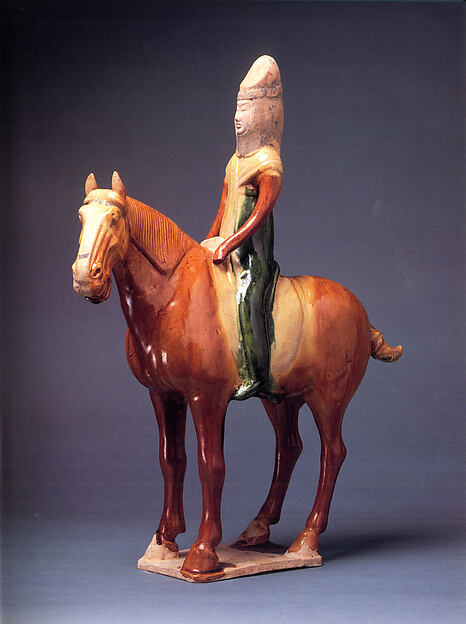
CivilisationMultiple Civilizations
RegionAsia
Period130 BCE to 1453 CE
Published20 February 2025
Advertisement
The term "Silk Road" was coined only in 1877 by the German geographer Ferdinand von Richthofen, but the network of overland and maritime routes it describes had been operating for nearly two thousand years before he named it. What moved along these routes was not primarily silk, though silk was certainly among its most valuable commodities, but rather everything that makes civilization possible: ideas, religions, technologies, diseases, and the restless human desire to know what lies beyond the horizon.
The Routes
The Silk Road was never a single road but a shifting network of routes connecting Chang'an (modern Xi'an) in China's Wei River valley to the Mediterranean ports of Antioch and Alexandria. The overland routes passed through some of the most forbidding terrain on earth: the Taklamakan Desert, the Pamir Mountains, the Iranian Plateau, and the Syrian Desert.
Most merchants did not traverse the entire length. Instead, goods passed through multiple hands, each trader taking a profit as the commodities moved westward. A bolt of Chinese silk might change hands a dozen times before reaching Rome, where wealthy patrons paid extraordinary prices for fabric that Romans found scandalously thin and revealing.
The maritime Silk Road followed the monsoon winds around the Indian Ocean, from South China Sea ports through the Strait of Malacca, across the Indian Ocean to the Persian Gulf and Red Sea, and thence to the Mediterranean.
What Traveled West
From China came silk, porcelain, lacquerware, paper, and cast iron, technologies the West would not independently develop for centuries or millennia. Paper, invented in China around 105 CE, gradually moved westward; Islamic papermakers in Samarkand were producing paper by the eighth century; Europe adopted the technology fully only in the twelfth and thirteenth centuries.
Gunpowder, another Chinese invention, reached the Islamic world by the ninth century and Europe by the thirteenth, where it would eventually end the age of castle warfare and transform European politics.
From the Roman world and Persia came gold and silver coin (of which China had chronic shortages), glassware, wine, wool, and linen. Indian textiles and spices found eager buyers throughout the network.
What Traveled in Both Directions
Religions moved along the Silk Road easily. Buddhism, originating in northern India in the fifth century BCE, spread along trade routes into Central Asia and China, carried by merchants who built Buddhist monasteries at oases as way stations. By the first century CE, Buddhist art had absorbed Greek influences from the Hellenistic kingdoms of Bactria, producing the distinctive Gandharan style that combined Greek sculptural technique with Buddhist iconography.
Islam, emerging in Arabia in the seventh century, spread rapidly along existing trade networks. Muslim merchants carried their faith to sub-Saharan Africa, to Southeast Asia, and deep into Central Asia, regions where Islam arrived not through military conquest but through commercial contact.
The Oasis Cities
The Silk Road's character was shaped by its oasis cities, settlements clustered around springs and rivers in otherwise impassable desert. Samarkand, Bukhara, Kashgar, Dunhuang: these were cosmopolitan places where merchants, monks, diplomats, and refugees from a dozen civilizations mingled.
Dunhuang, on the edge of the Gobi Desert, was both a Buddhist pilgrimage site and a Silk Road waystation. The Mogao Caves near the town contain thousands of Buddhist paintings and sculptures dating from the fourth to fourteenth centuries, one of the world's greatest repositories of medieval art. In 1900, a Daoist monk discovered a sealed chamber containing 40,000 manuscripts in Chinese, Tibetan, Sanskrit, and a dozen other languages, preserved by the dry desert air since the eleventh century.
The Plague
Not everything that traveled the Silk Road was beneficial. The pandemic known in Europe as the Black Death, which killed perhaps a third of Europe's population between 1347 and 1353, almost certainly arrived via Silk Road trade routes. The bacterium Yersinia pestis, which causes bubonic plague, likely originated in rodent populations in Central Asian steppe regions. Mongol military movements in the early fourteenth century may have spread the disease to previously unaffected populations, from where it traveled westward along trade routes.
The End of an Era
The Silk Road's decline as a primary trade network was sealed by several factors. The Ottoman conquest of Constantinople in 1453 disrupted traditional overland routes to the East, motivating European powers to seek maritime alternatives. Vasco da Gama's rounding of the Cape of Good Hope in 1498 opened a direct sea route from Europe to India, bypassing the Silk Road's many intermediaries.
But the Silk Road's legacy persisted in the landscapes, languages, and religions it had shaped across two millennia of continuous operation.
Advertisement
Timeline Placement
130 BCE – 1453 CE
Classical Era · Multiple Civilizations · Asia
TradeCultureReligionTechnology
Continue: The Classical World
Related Articles
ClassicalAnalysis
The Library of Alexandria and What Was Actually Lost
The most famous library in history did not burn down in a single night. What happened to it is slower, less dramatic, …
4 min
RenaissanceAnalysis
Gutenberg and the First Information Explosion
Movable type existed in Asia centuries earlier. What Gutenberg assembled in Mainz was a production system, and the con…
3 min
ClassicalAnalysis
The Birth of Democracy in Athens
How the reforms of Cleisthenes and Pericles created the world's first participatory democracy in fifth-century Athens,…
5 min
Further Reading
As an affiliate, we earn from qualifying purchases. These recommendations are independently selected.
📚 Book
The Silk Roads
Peter Frankopan
A new history of the world through its trade networks.
View on Amazon →
📚 Book
Sapiens
Yuval Noah Harari
A brief history of humankind and the cultures we created.
View on Amazon →
📚 Book
The History of God
Karen Armstrong
Four thousand years of Judaism, Christianity, and Islam.
View on Amazon →
Advertisement