Modern Europe · 2010
Gutenberg and the First Information Explosion
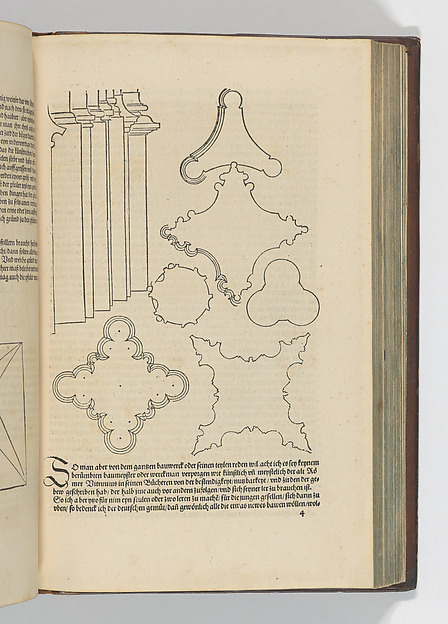
Movable type existed in Asia centuries earlier. What Gutenberg assembled in Mainz was a production system, and the consequences ran well past the books themselves.
CivilisationHoly Roman Empire
RegionEurope
Period1440 CE to 1550 CE
Published31 July 2026
Advertisement
Movable type was not invented in Mainz. Bi Sheng made ceramic type in China around 1040, and Korea was printing with cast metal type by the thirteenth century, producing the Jikji in 1377, decades before Gutenberg.
What Johannes Gutenberg assembled around 1440 was not a single invention but a working system, and the difference between an invention and a system is the whole story.
The Parts
The mould. The hardest problem was not printing but making thousands of identical letters quickly and cheaply. Gutenberg's adjustable hand mould let a worker cast type from a matrix at speed, with each piece the same height so the whole page would print evenly.
The alloy. Lead alone is too soft, tin too expensive. A lead, tin and antimony mixture cast crisply, cooled fast, and survived thousands of impressions. Antimony expands slightly as it solidifies, which pushes the metal into the corners of the mould and sharpens the letter.
The ink. Water based scribal ink beads on metal. Gutenberg used an oil based ink, closer to what painters were using, which adhered to type and did not bleed through the paper.
The press. Adapted from the screw presses already used for wine and olives, which applied even pressure across a flat surface.
Paper. Cheaper than parchment and by then manufactured in Europe. A large printed book still consumed a great deal of it, but not a herd of animals.
An alphabet of roughly two dozen letters also helped. A Chinese printing shop needed thousands of distinct characters on hand, which made the economics of movable type much harder there.
What Happened Next
The spread was fast. Printing reached Italy by 1465, Paris by 1470, and by 1500 there were presses in more than two hundred European towns. Perhaps twenty million volumes had been printed by then, in a continent of around eighty million people who were mostly illiterate.
Prices fell by an order of magnitude within a few decades. A book stopped being a possession of institutions and became something a merchant or a student might own.
The Second Order Effects
Standardised text. Every manuscript copy introduced errors. Printing produced thousands of identical copies, which made it possible to cite a page number and have a correspondent find the same words. Cumulative scholarship depends on that.
Vernacular languages hardened. Printers chose a dialect to set type in, and the chosen form gained prestige while others faded. Modern standard German, English and French all owe some of their shape to what early printers decided was normal.
Religious upheaval. Luther's Ninety Five Theses in 1517 spread across Germany within weeks. Earlier reformers had made comparable arguments and been contained. Luther's could not be contained because copies were being printed faster than authorities could seize them, and he wrote in German for readers rather than only in Latin for clerics.
Censorship as an institution. The response to uncontrollable copying was the licensing of presses, the Index of Prohibited Books from 1559, and the origins of copyright, which began as a printing monopoly rather than an author's right.
The Part Worth Remembering
Gutenberg died without much money. He lost his workshop to his financier Johann Fust in a lawsuit around 1455, roughly when the Bible that carries his name was being finished.
The system he assembled outlived that entirely. Every argument about a new technology making information too cheap to control has been had before, in the sixteenth century, with roughly the same participants: people delighted by the access, authorities alarmed by the loss of the chokepoint, and no way back.
Advertisement
Timeline Placement
1440 CE – 1550 CE
Renaissance Era · Holy Roman Empire · Europe
TechnologyCultureReligionTrade
Continue: Culture Through the Ages
Related Articles
ClassicalAnalysis
The Silk Road: Arteries of the Ancient World
How the interconnected trade routes known as the Silk Road facilitated not just the exchange of goods but the transmis…
4 min
MedievalAnalysis
The Black Death and the Bargaining Power of Survivors
A pandemic that killed perhaps half of Europe also destroyed the labour arrangements that had held for centuries. What…
3 min
📡
ContemporaryBriefing
Ancient DNA Is Rewriting Prehistory Faster Than Textbooks Can Follow
Genomes recovered from bone are settling arguments archaeology could not settle, and starting several new ones. An ong…
3 min
Further Reading
As an affiliate, we earn from qualifying purchases. These recommendations are independently selected.
📚 Book
Sapiens
Yuval Noah Harari
A brief history of humankind and the cultures we created.
View on Amazon →
📚 Book
The History of God
Karen Armstrong
Four thousand years of Judaism, Christianity, and Islam.
View on Amazon →
📚 Book
The Silk Roads
Peter Frankopan
A new history of the world through its trade networks.
View on Amazon →
Advertisement