Ancient Greece · 508 BCE
Pharaohs and Eternity: Ancient Egypt's Divine Rulers
Exploring how Egyptian pharaohs wielded absolute divine authority over one of history's most enduring civilizations, shaping religion, architecture, and culture across three millennia.
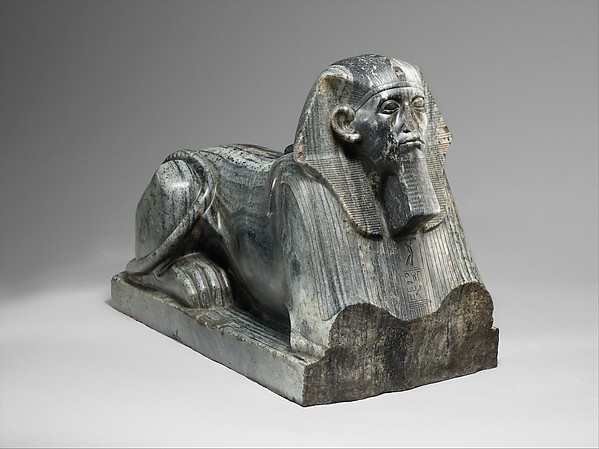
CivilisationAncient Egypt
RegionNorth Africa
Period3100 BCE to 30 BCE
Published22 January 2025
Advertisement
For nearly three thousand years, a single institution defined Egyptian civilization: the pharaoh. Neither purely king nor purely god, the pharaoh occupied a unique position at the intersection of the human and divine, serving as the earthly manifestation of Horus during life and becoming Osiris after death.
The Divine Nature of Kingship
To understand the pharaoh, one must abandon modern assumptions about the separation of religion and state. In ancient Egypt, no such distinction existed. The pharaoh did not merely speak for the gods. He was a god, responsible for maintaining ma'at, the cosmic principle of truth, justice, and harmony.
When the Nile flooded its banks each summer, depositing rich silt that would nourish the next harvest, this was understood as the result of the pharaoh's correct relationship with the divine order. When drought struck or enemies crossed the borders, it signaled a disruption in ma'at, potentially the result of ritual failures or political disorder.
This theology of royal divinity was not mere propaganda. It served as the ideological glue holding together a vast, complex state that stretched from the Nile Delta to Nubia, encompassing diverse populations, landscapes, and local traditions.
Pyramids as Theological Statements
No monument better expresses Egyptian concepts of royal power than the pyramids of Giza. Constructed during the Fourth Dynasty (c. 2575-2465 BCE) under pharaohs Khufu, Khafre, and Menkaure, these structures were not simply tombs. They were machines for resurrection.
The pyramid's form may represent the primordial mound of creation that arose from the waters of chaos. Its limestone casing, once polished to blinding whiteness, may have symbolized the sun itself. The internal passages aligned precisely with certain stars, specifically with the circumpolar stars that never set, eternal and unchanging, just as the pharaoh's ka (divine essence) was meant to be.
To build the Great Pyramid of Giza required marshaling the labor of perhaps 20,000 workers, organized into rotating crews with specialized roles. Recent archaeological evidence has demolished the old myth of pyramid-building by slaves; instead, workers were skilled laborers who received good food, medical care, and burial honors if they died during service.
Women on the Throne
Among the most striking aspects of Egyptian history is the periodic appearance of female pharaohs, a phenomenon almost without parallel in the ancient world. Hatshepsut (c. 1473-1458 BCE) was the most successful of these rulers.
Serving initially as regent for her young stepson Thutmose III, Hatshepsut progressively adopted all the insignia and titles of kingship, including the false beard worn ceremonially by pharaohs. She dispatched a trading expedition to the land of Punt, recovering myrrh trees, ebony, and ivory. She commissioned the magnificent mortuary temple at Deir el-Bahari, still one of Egypt's most beautiful ancient monuments.
After her death, Thutmose III ordered her images defaced and her name removed from inscriptions, an damnatio memoriae that may reflect political rivalry rather than personal animus. For centuries, Egyptologists knew nothing of her reign; her story was recovered only through careful detective work in the nineteenth and twentieth centuries.
The New Kingdom and Imperial Expansion
The New Kingdom (c. 1550-1070 BCE) represented Egypt at its most expansive and cosmopolitan. Pharaohs like Thutmose III and Ramesses II commanded armies that reached the Euphrates River and clashed with the Hittite Empire of Anatolia.
The Battle of Kadesh (c. 1274 BCE) between Ramesses II and the Hittite king Muwatalli II became the subject of one of history's most ambitious pieces of royal propaganda. Ramesses, nearly captured when his army was ambushed, rallied his forces and claimed a great victory. The Hittites made similar claims. What followed was perhaps the first documented peace treaty in history, preserved in both Egyptian hieroglyphs and Hittite cuneiform.
Decline and Legacy
From the Third Intermediate Period onward, Egypt faced increasing fragmentation and foreign rule. Libyans, Nubians, Assyrians, and Persians each held the throne at various points. When Alexander the Great conquered Egypt in 332 BCE, he was welcomed as a liberator and eagerly adopted the pharaonic tradition for himself.
The Ptolemaic dynasty founded by Alexander's general Ptolemy persisted until 30 BCE, when Cleopatra VII, the last of her line, faced defeat at Roman hands. With her suicide, the three-thousand-year tradition of the pharaonate came to an end.
Yet Egypt's influence persisted. Roman emperors adopted pharaonic imagery to legitimize their rule over Egypt. The hieroglyphic writing system, deciphered only with the Rosetta Stone in the nineteenth century, opened a vast literary and religious tradition to modern scholars. The pyramids still stand.
Advertisement
Timeline Placement
3100 BCE – 30 BCE
Ancient Era · Ancient Egypt · North Africa
ReligionCulturePoliticsArchitecture
Continue: Culture Through the Ages
Related Articles
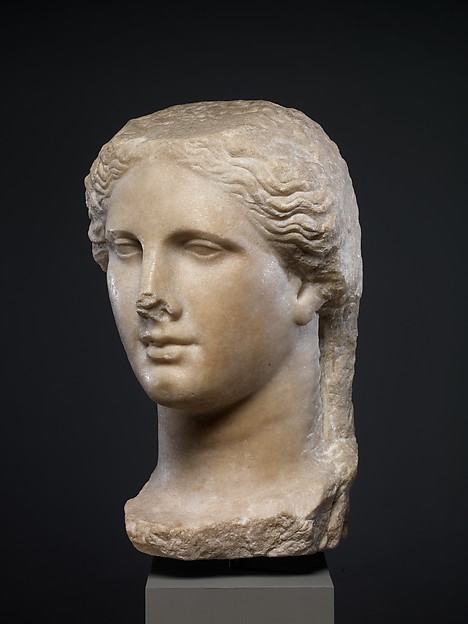
ClassicalBiography
Alexander the Great: The World Conqueror
Tracing Alexander III of Macedon's extraordinary military campaigns from Greece to India, examining both his strategic…
5 min
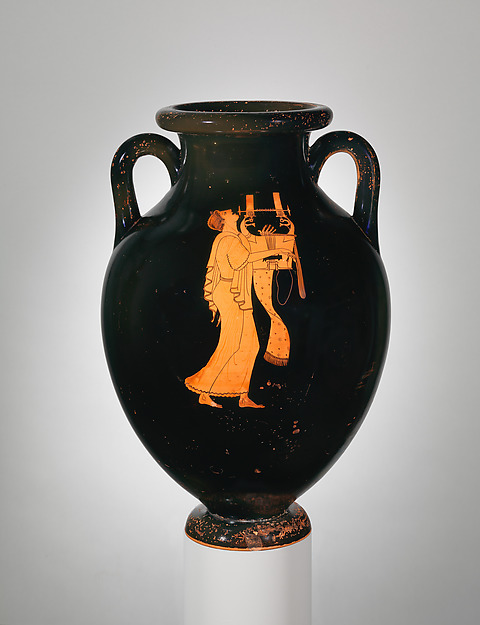
ClassicalAnalysis
The Birth of Democracy in Athens
How the reforms of Cleisthenes and Pericles created the world's first participatory democracy in fifth-century Athens,…
5 min
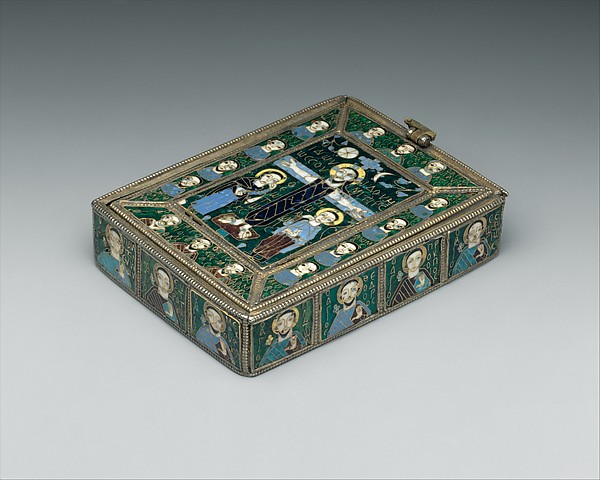
MedievalEvent
The Fall of Constantinople, 1453
How the Ottoman Sultan Mehmed II ended a thousand years of Byzantine civilization in a fifty-three day siege that resh…
4 min
Further Reading
As an affiliate, we earn from qualifying purchases. These recommendations are independently selected.
📚 Book
The History of God
Karen Armstrong
Four thousand years of Judaism, Christianity, and Islam.
View on Amazon →
📚 Book
Sapiens
Yuval Noah Harari
A brief history of humankind and the cultures we created.
View on Amazon →
📚 Book
The Prince
Niccolò Machiavelli
The classic treatise on political power and statecraft.
View on Amazon →
Advertisement